
Focused deep dive
Ask Synth + Flow: turning retail AI agents into daily operator workflows.
A focused product-agent case study on Ask Synth, Flow, Playbook, LangGraph-style orchestration, tool-calling guardrails, output cleanup, and operator-facing decision support.
Role
Full-Stack AI/ML Engineer
Status
Evidence-backed deep dive
 Evidence visual
HeySynth
Flagship product evidence, shown inline so the reader stays inside the case study.
10 proof assets
Technical Scope
Stack
Story Snapshot
The short version before the deep dive.
Situation
Retail teams needed AI assistance that could summarize risk, explain impact, and fit into existing execution routines.
Problem
Generic chat UX was not enough. Agents needed to avoid loop behavior, suppress internal tool noise, and return grounded outputs teams could act on.
Direction
I focused on orchestration safety and productized UX: Ask Synth for reports, Flow for signal triage, and Playbook for repeatable agent workflows.
Case Study Narrative
Problem, solution, and the thinking behind the system.
A product story anchored in the screens, workflows, and implementation evidence behind the build.
01 / Situation
Agents had to support operator decisions, not just produce fluent responses.
HeySynth operators asked practical questions about stock risk, impacted SKUs, and revenue exposure. They needed answers they could review and act on quickly.
A chat-only assistant was not enough. The product needed structured output, context continuity, and clear follow-up paths in the same workflow.
That made this an agentic product problem where orchestration quality and interface quality had equal weight.
02 / Ask Synth
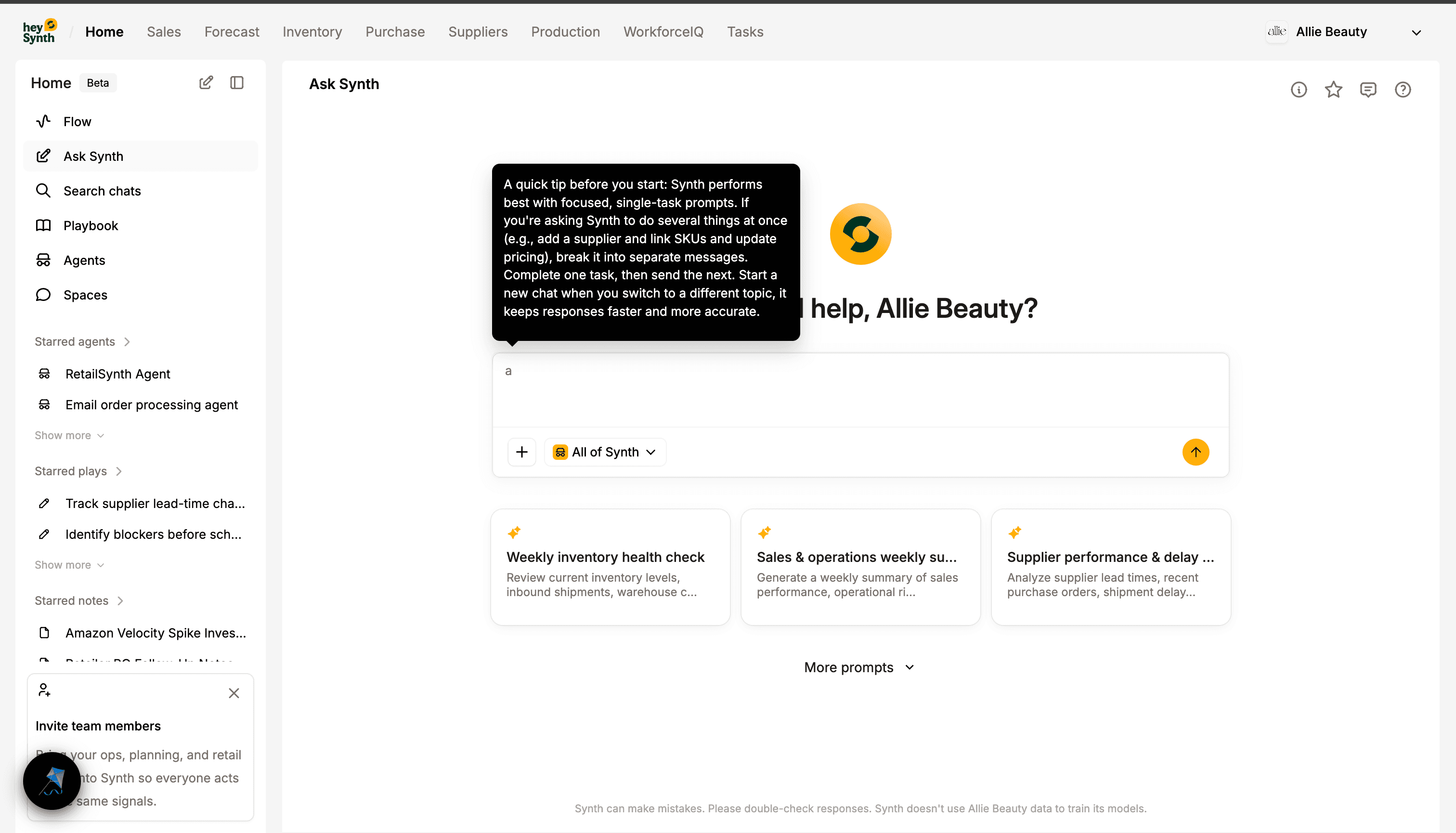
Conversational UX was grounded around retail reporting tasks.
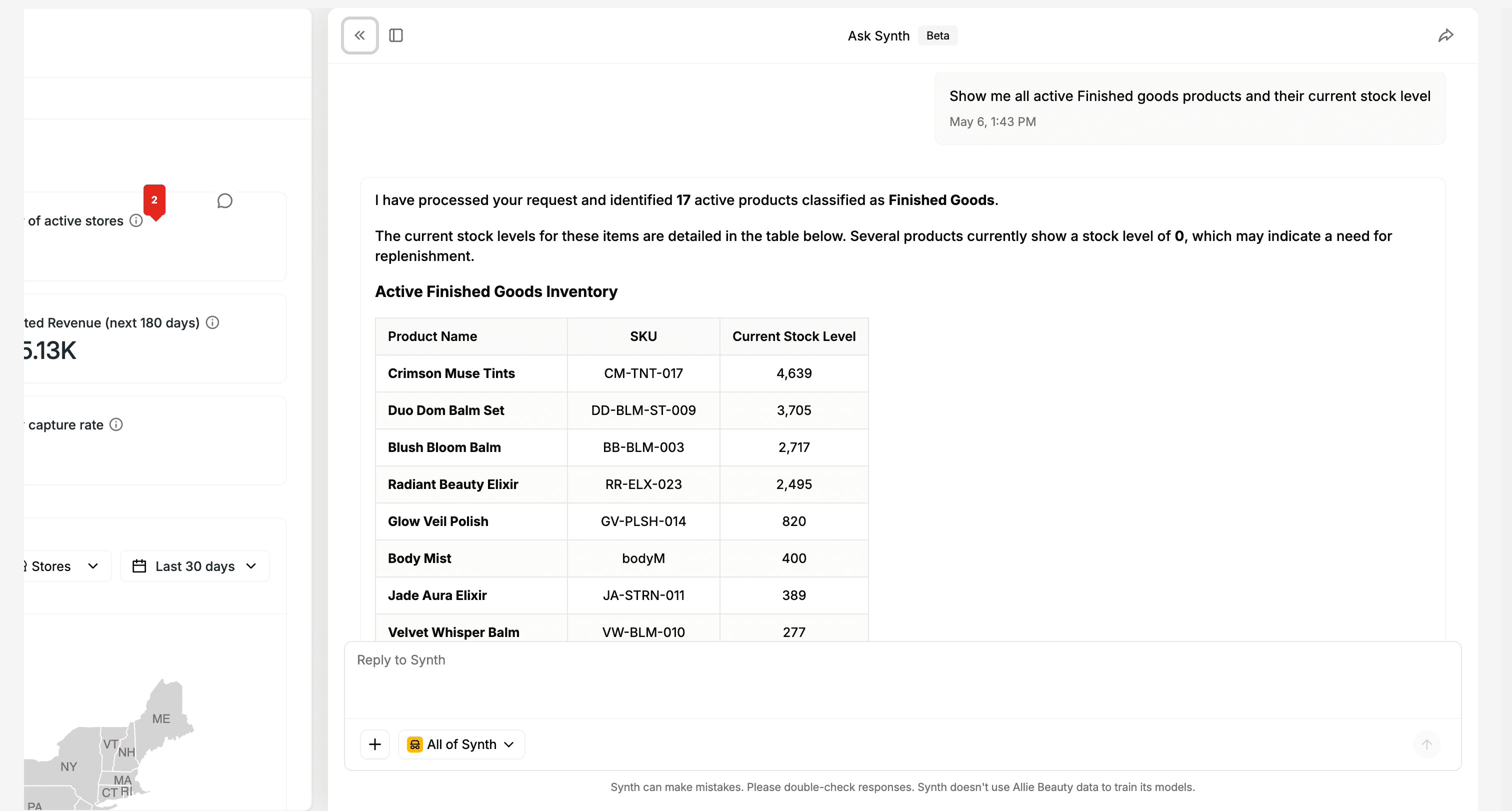
Ask Synth was shaped to return operationally useful responses instead of generic chat prose.
I worked across frontend and agent-touching behavior so prompts, follow-ups, and generated reports stayed readable and business-grounded.
This reduced the gap between asking a question and receiving a decision-ready artifact.
Image proofAsk Synth: grounded prompt and response flow
Operator-facing surface for generating retail-specific reports from natural-language prompts.
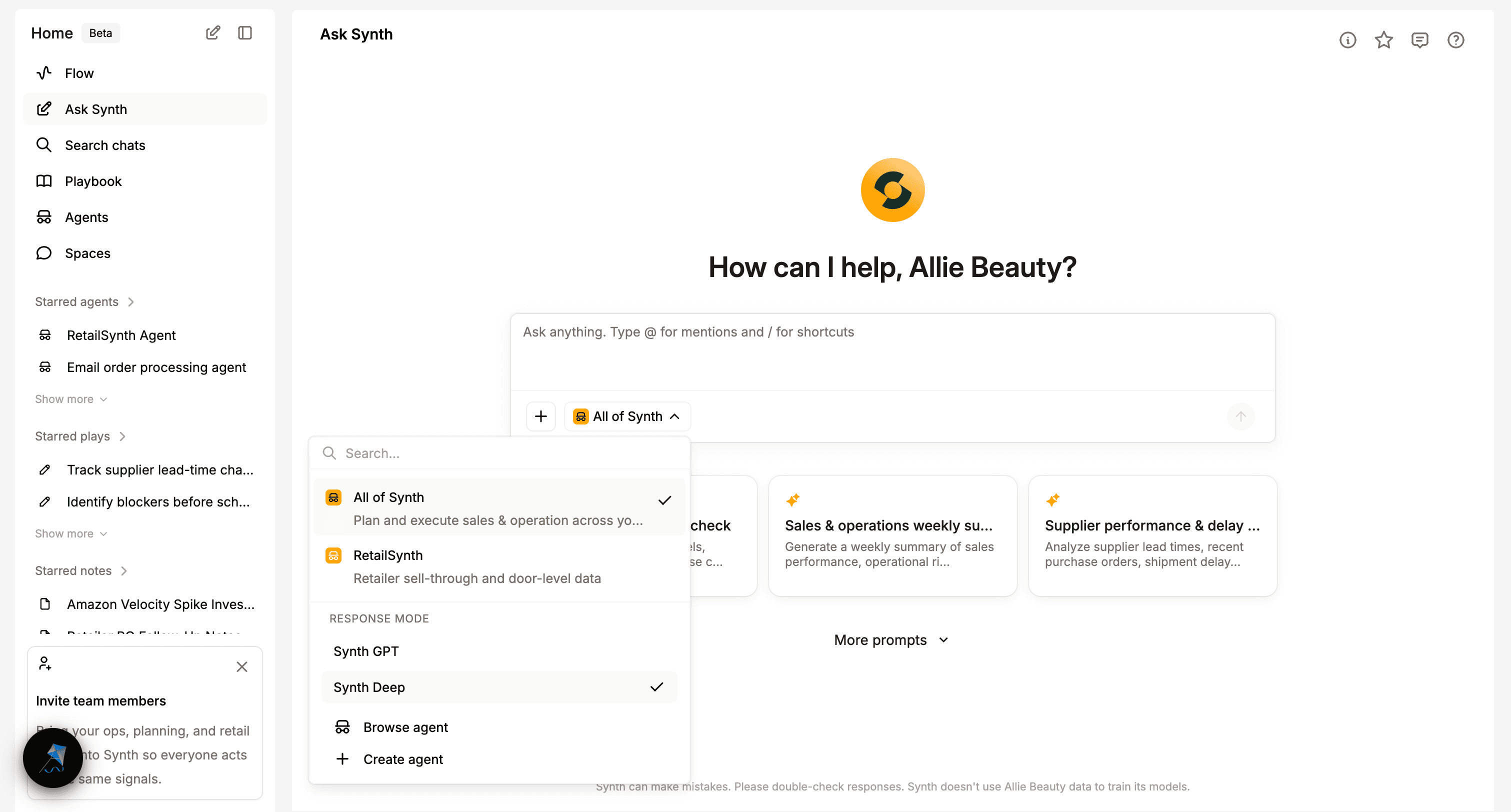 Image proof
Ask Synth report workflow variant
Additional evidence of report-style output and follow-up workflow state.
03 / Flow
Flow translated distributed AI signals into a daily operating cockpit.
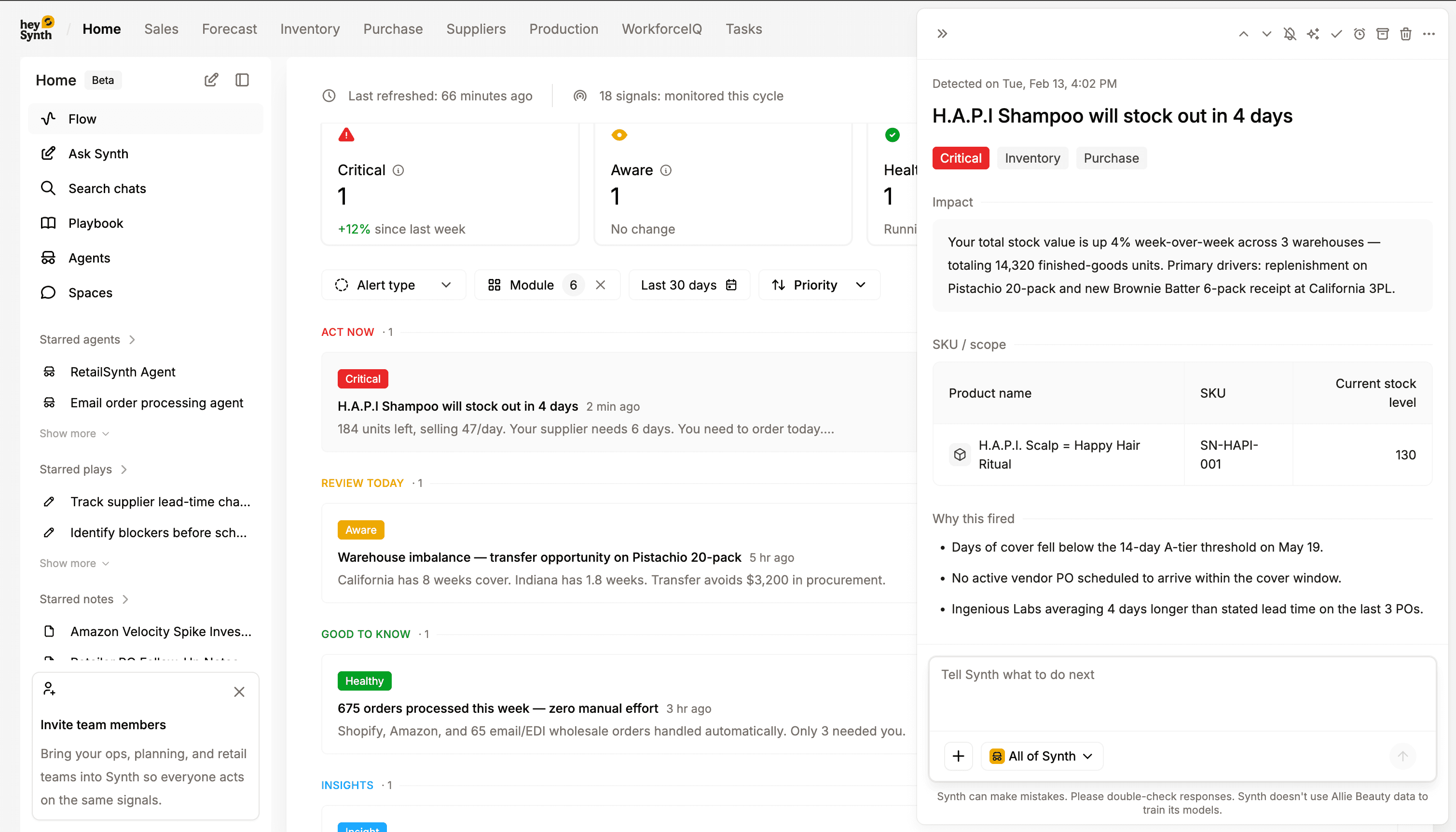
Flow grouped signals by urgency so teams could start from what changed overnight instead of scanning disconnected dashboards.
I treated it as workflow infrastructure: clear severity framing, status context, and clean handoff from signal to action.
The outcome was practical trust because users could see why an issue mattered and decide quickly.
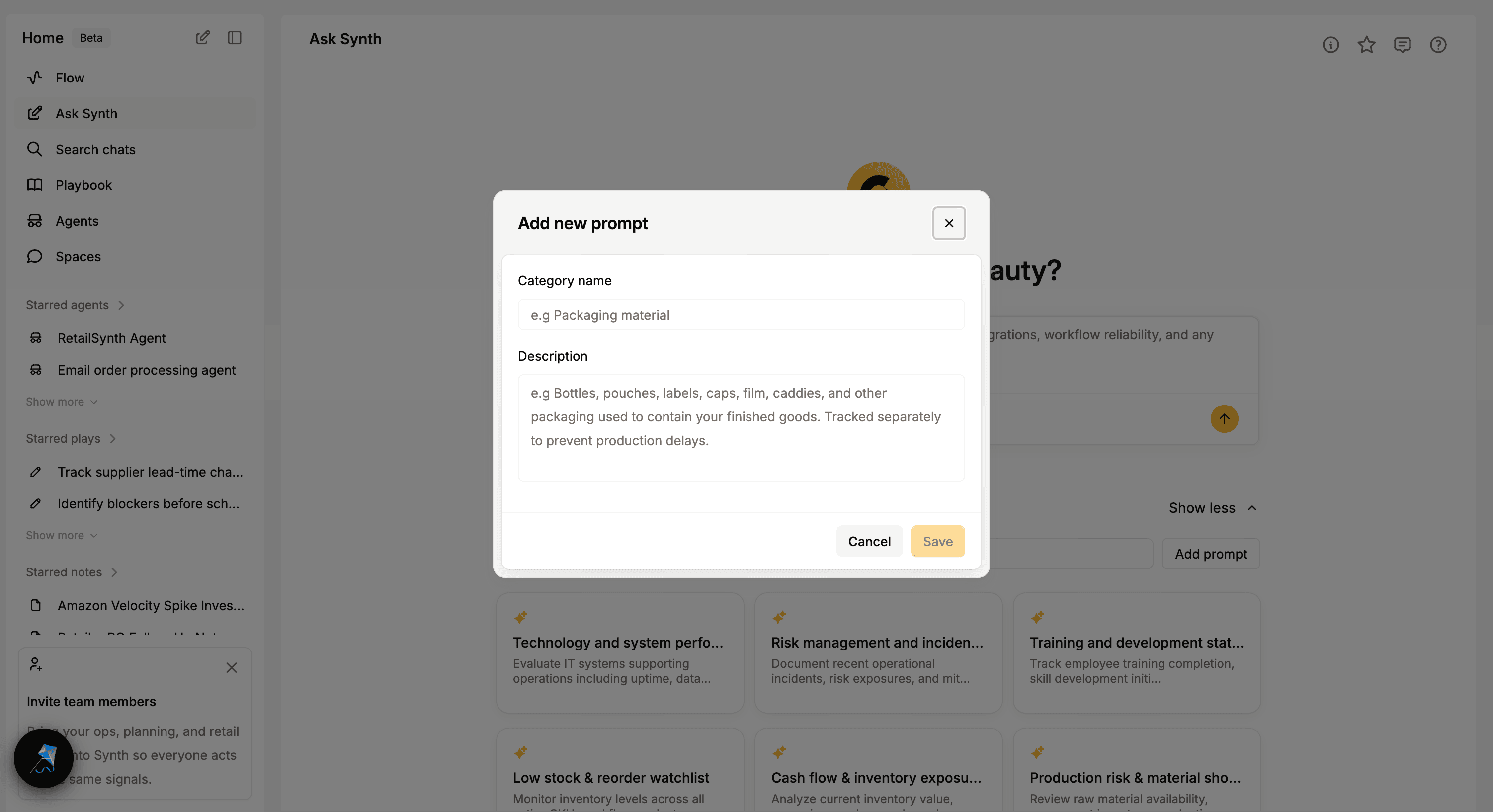 Image proof
Flow: priority-based operations surface
Signal triage interface for critical, aware, and healthy operational states.
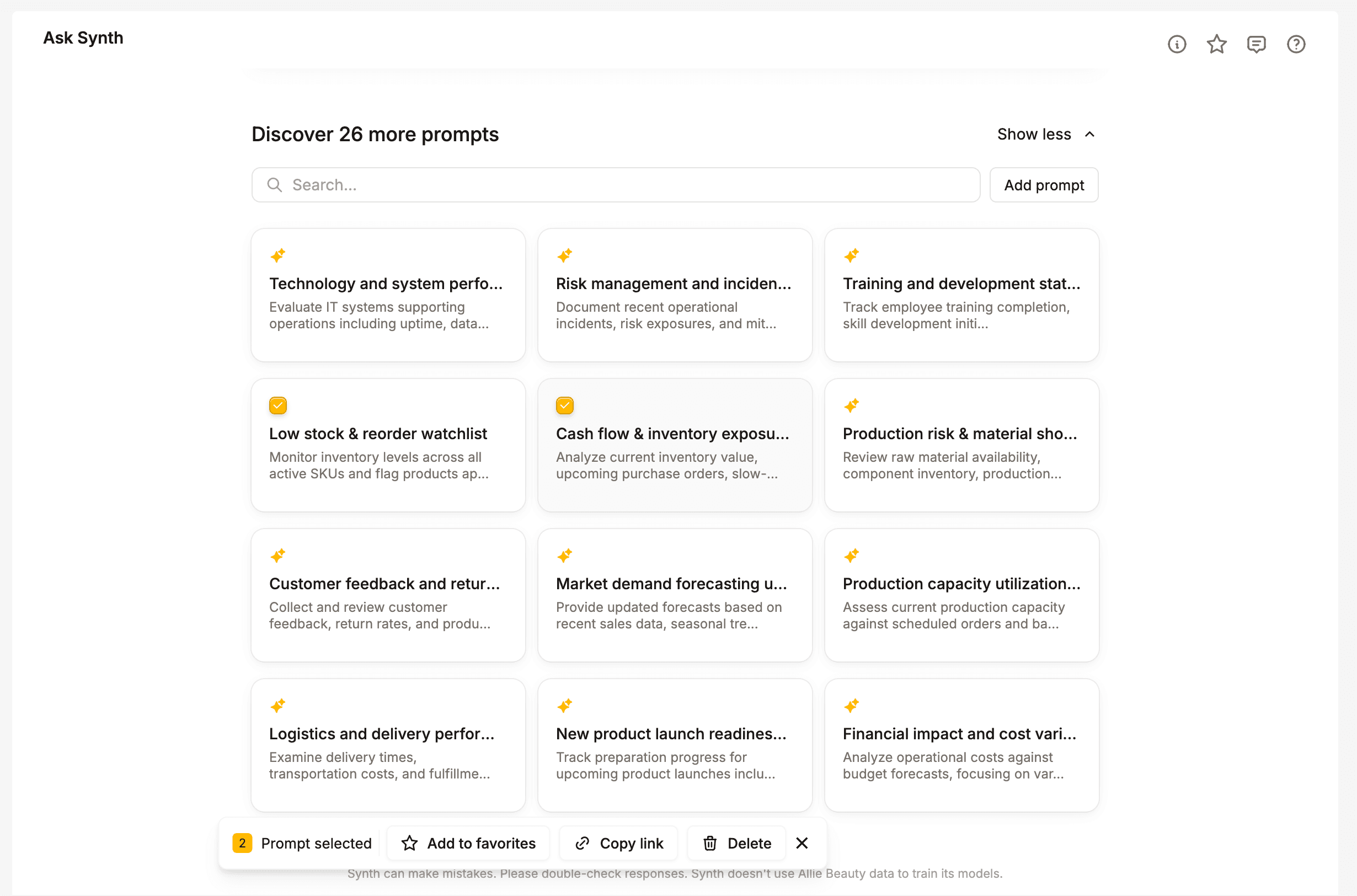 Image proof
Flow operations board variant
Supporting signal board view showing workflow prioritization across alert states.
04 / Playbook
Repeated successful agent tasks became reusable workflows.
Once teams found high-value prompts, Playbook let them reuse runs instead of rebuilding the same interaction every time.
This shifted agents from ad hoc usage to repeatable routines with visible run history.
It improved adoption by moving value from one-off chat moments to team-level workflows.
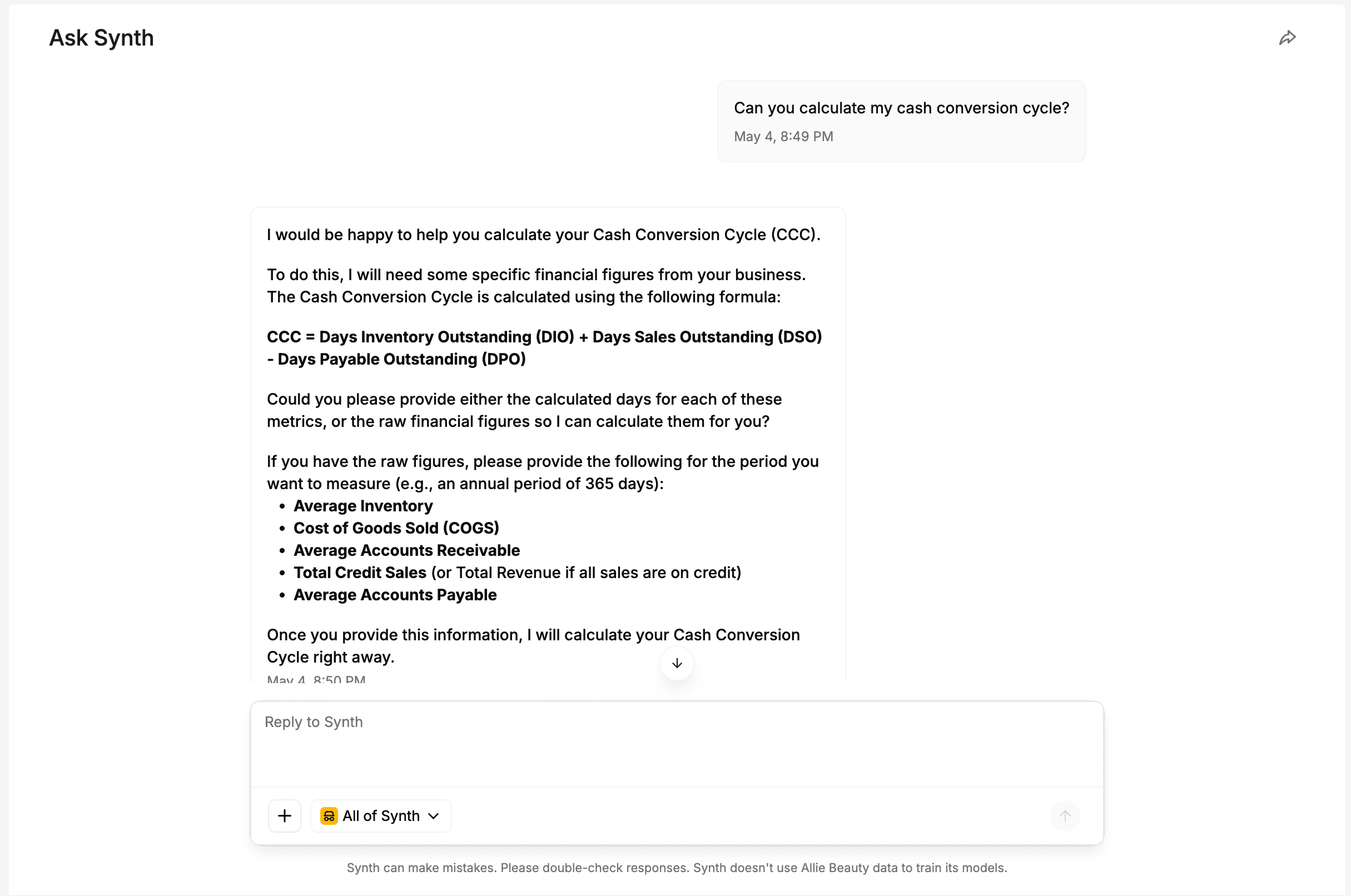 Image proof
Playbook: reusable AI operations
Reusable run surfaces that turn recurring AI tasks into operational workflows.
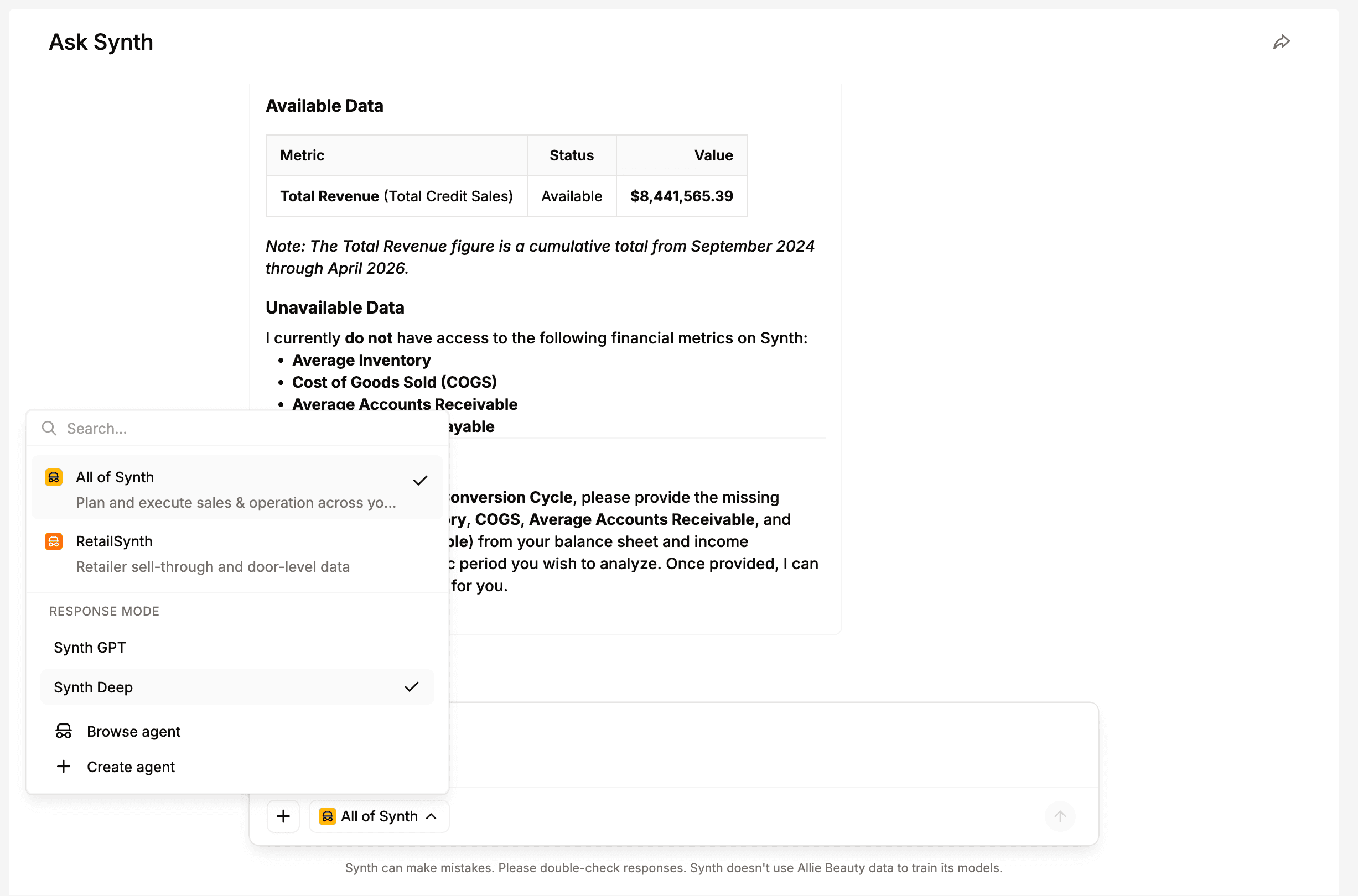 Image proof
Playbook run detail
Run-level workflow detail showing reusable agent execution states and outputs.
05 / Production Evidence
The current proof set already shows a live agent workflow stack.
Ask Synth screenshots show grounded prompts and report-style outputs tied to real retail decisions.
Flow and Playbook surfaces show how agent outputs become triage inputs and reusable workflow assets.
Together, these screens document a live agent workflow stack built for daily operations.
The agent story is backed by real UI and workflow evidence.
The case study now reads as shipped product engineering, not future intent.
Proof Layer
The work spanned multiple connected systems, not one isolated feature.
This is the proof layer: each stream maps to implementation history while keeping private repository and customer details out of the public page.
Ask Synth report experience
Agent UX + response qualityProblem
Operators needed answers they could act on, but generic assistant responses were often too vague or disconnected from workflow context.
What I Built
I worked on the Ask Synth interaction and rendering flow to support grounded prompts, cleaner generated reports, and better follow-up behavior for planning tasks.
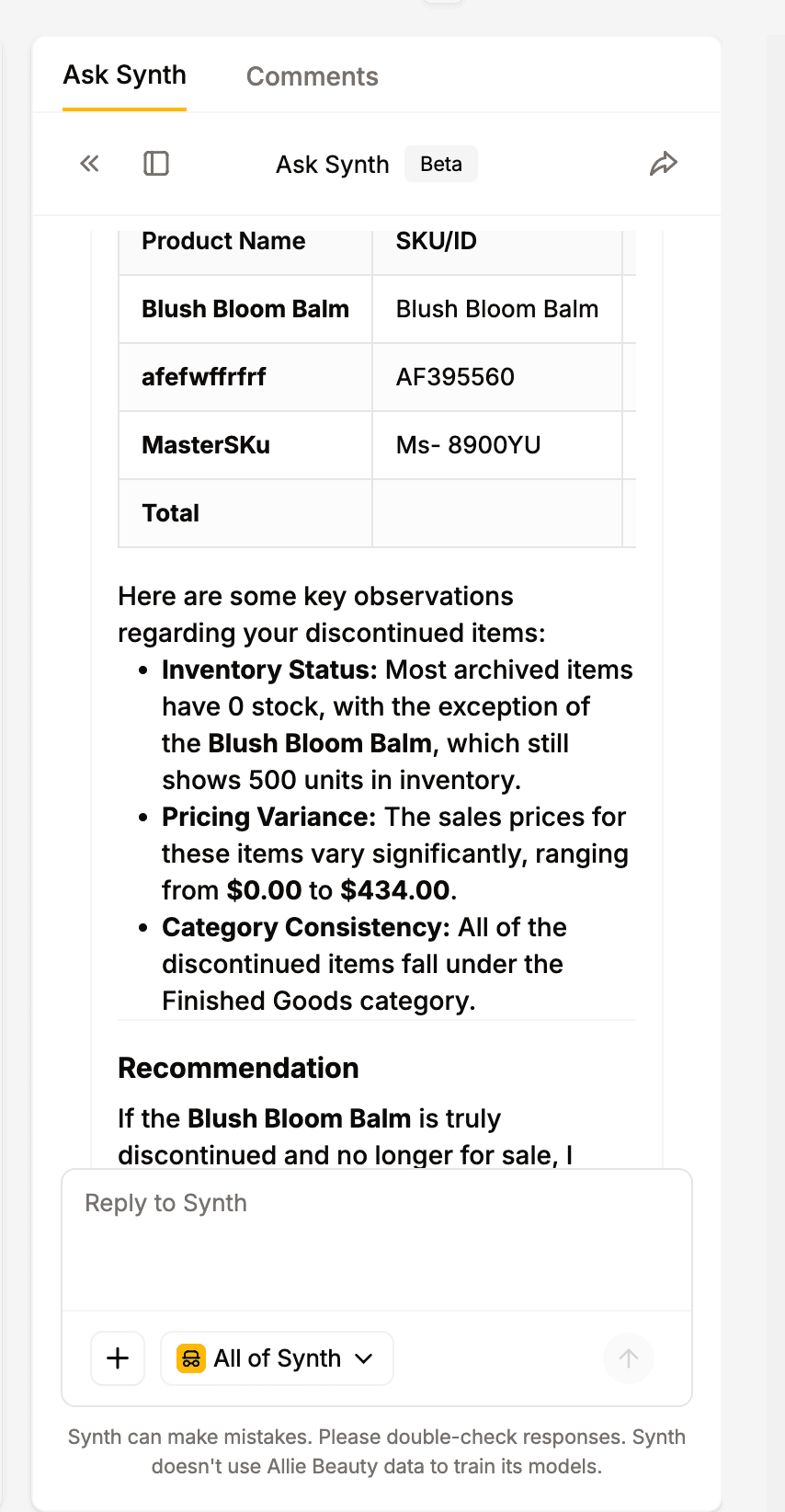
Visible proof in Ask Synth screens that show structured out-of-stock and revenue-impact report output.
Implementation proofAsk Synth generated operational report
Business-grounded response format that supports immediate planning decisions.
Flow signal orchestration surface
Operational decision UXProblem
Important AI-derived signals were easy to miss without a prioritized view tied to business impact.
What I Built
I helped shape Flow as a triage cockpit where signals are grouped by urgency and presented with enough context for quick action.
Evidence is visible in the Flow interface where risk and priority are surfaced as operational categories.
Implementation proofFlow operations cockpit
Priority-first signal layer that connects AI outputs to daily execution.
Playbook workflow productization
Reusable agent workflowsProblem
High-value prompts were repeated manually, causing inconsistency and weak team-level reuse.
What I Built
I contributed to Playbook surfaces and workflow behavior that turn recurring agent tasks into repeatable runs with visible status and output history.
Proof is present in Playbook screens that show active plays, run tracking, and reusable operational patterns.
Implementation proofPlaybook run management
Workflow surface for managing recurring agent runs and outputs.
Why It Matters
This was not a single feature. It was production AI ownership across the stack.
Evidence
Agentic product lens is distinct from forecasting: orchestration trust, output quality, and workflow adoption.
Real screenshots already validate Ask Synth, Flow, and Playbook as connected operator surfaces.
Demonstrates full-stack AI ownership where backend/agent behavior and frontend product UX are co-designed.
What this says about me
Strong fit for agentic AI product teams shipping operator-facing decision systems.
Shows ability to bridge orchestration internals with polished end-user workflows.
Demonstrates production-minded approach to AI trust, not just model integration.
Evidence Library
A closer look at the product surfaces.
Curated proof from the workflows behind the story: the operating cockpit, Ask Synth, Playbook, forecasting, and forecast upload surfaces.
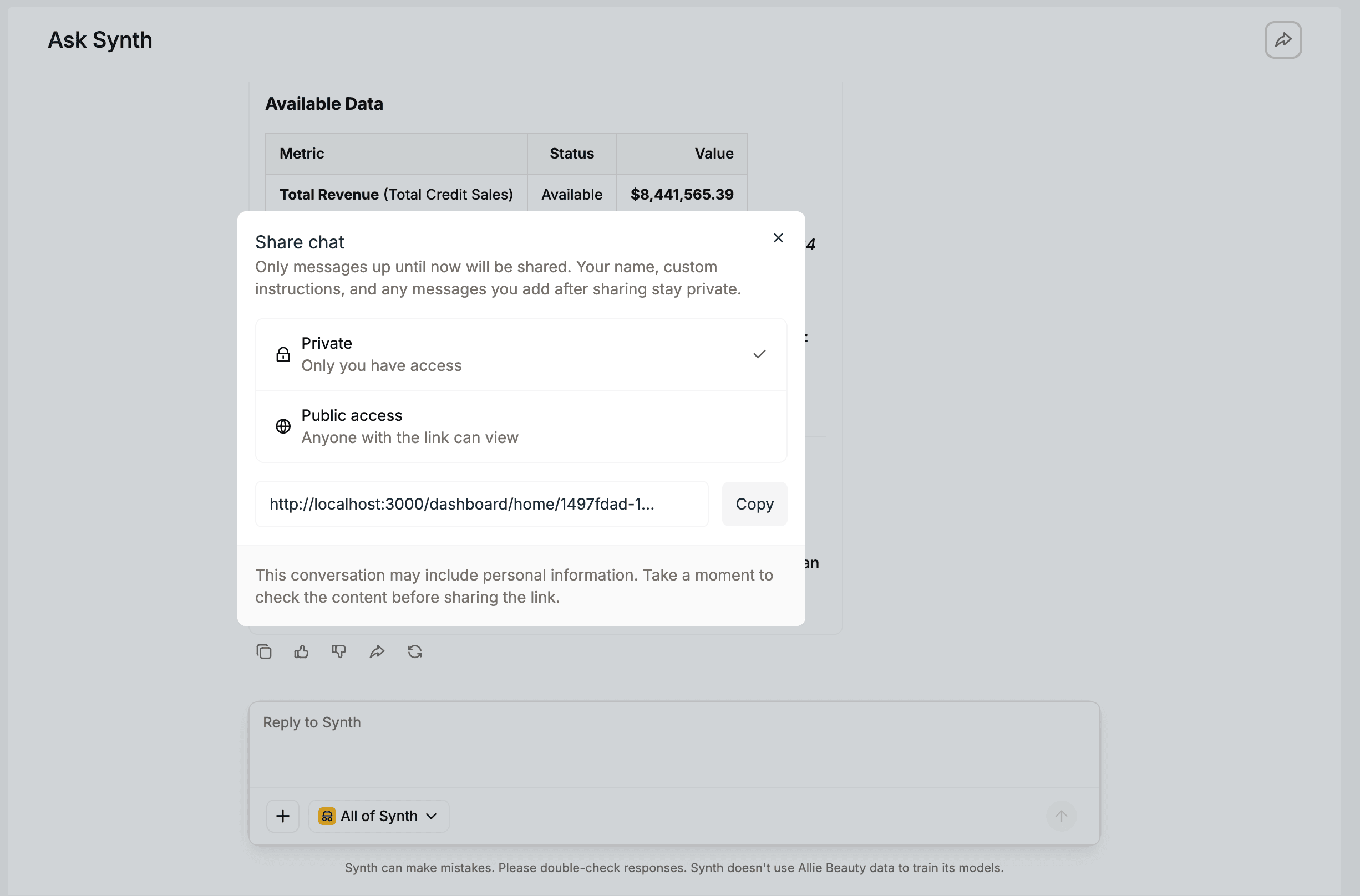
Product screenshotAsk Synth report generation surface
The main operational surface: signals, risk, and suggested actions in one place.
Product screenshotAsk Synth follow-up workflow state
Product screenshotFlow priority board overview
Product screenshotFlow risk triage detail
Product screenshotPlaybook run library overview
Product screenshotPlaybook execution detail view
 Product screenshot
Agent workflow status timeline
 Product screenshot
Agent decision support panel
 Product screenshot
Operational insights and actions view
 Product screenshot
Cross-workflow summary dashboard
Decisions
Trade-offs I owned.
Prioritize grounded report-style outputs over generic conversational flair.
Harden orchestration behavior around loops, tool-noise suppression, and clean output rendering.
Turn repeated agent tasks into reusable playbooks so AI workflows become operational assets.