
Focused deep dive
Forecast Mode: making demand forecasting controllable for retail teams.
A focused technical case study on forecasting strategy, model routing, channel/SKU controls, import reliability, and the MLOps path around long-running forecast workflows.
Role
Full-Stack AI/ML Engineer
Status
Evidence-backed deep dive
 Evidence visual
HeySynth
Flagship product evidence, shown inline so the reader stays inside the case study.
12 proof assets
Technical Scope
Stack
Story Snapshot
The short version before the deep dive.
Situation
Retail planners needed forecasts they could trust across channels where data quality and history depth varied widely by SKU.
Problem
A single forecasting posture was brittle: sparse-history SKUs needed safer defaults, richer-history SKUs needed stronger model paths, and imports had to run safely without blocking product workflows.
Direction
I treated forecast control and worker reliability as product features: route model behavior by data reality, expose controls in Forecast Mode, and keep long jobs observable end to end.
Case Study Narrative
Problem, solution, and the thinking behind the system.
A product story anchored in the screens, workflows, and implementation evidence behind the build.
01 / Situation
Forecasting had to serve operators making inventory calls under uncertainty.
Forecasts at HeySynth were not abstract metrics. They informed replenishment decisions, risk windows, and channel-level planning where incorrect confidence can be expensive.
SKU behavior varied sharply. Some product-channel pairs had enough history for richer inference paths, while others needed conservative handling to avoid overconfident projections.
The production challenge was not only model quality. It was designing a forecasting system that could behave safely under uneven data and still remain actionable for planners.
The user problem was trustworthy planning, not chart aesthetics.
Model behavior needed to adapt to SKU/channel data reality.
02 / System Design
Forecast behavior became explicit and controllable through productized modes.
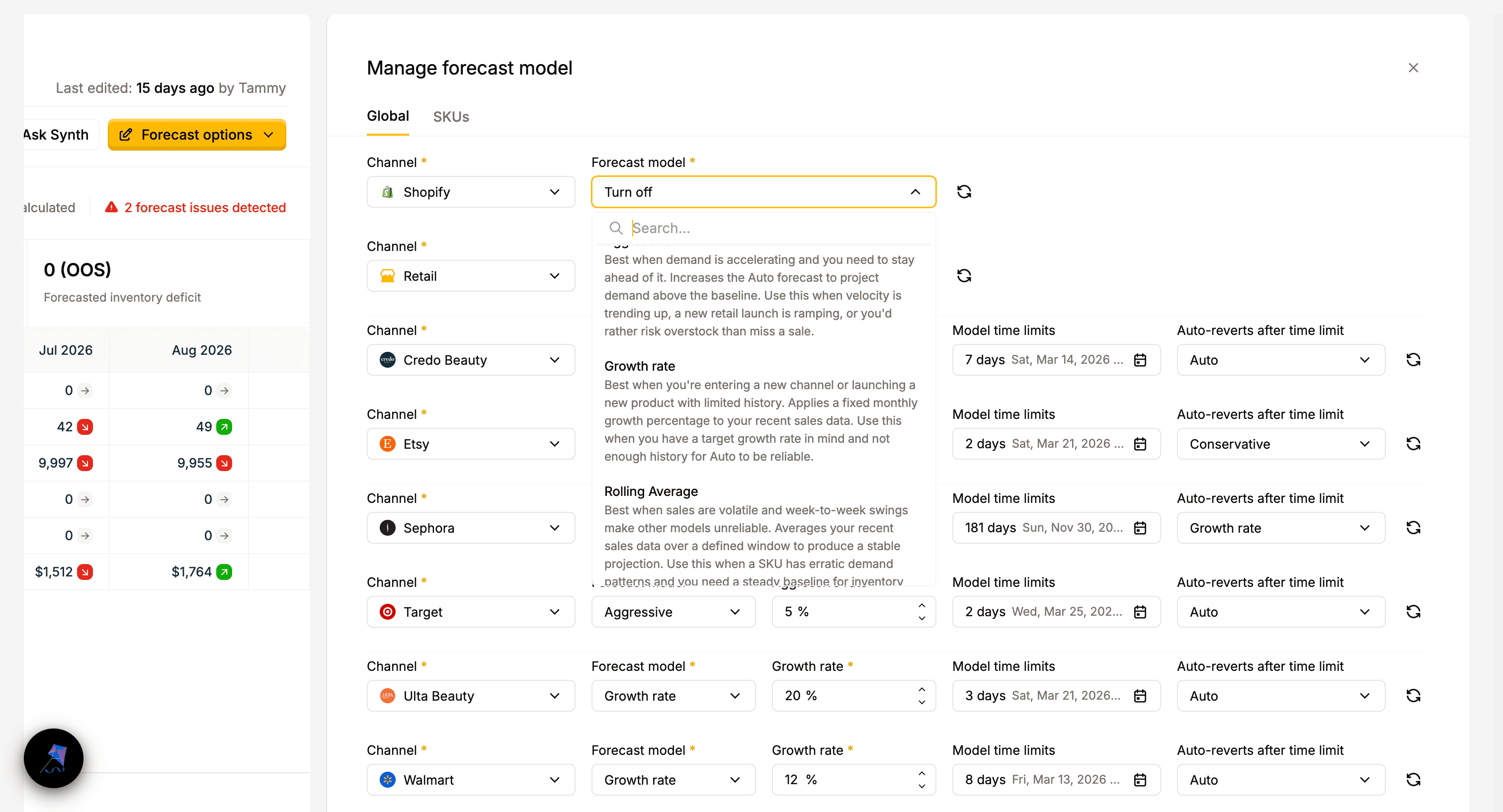
Instead of keeping forecast posture hidden in backend defaults, Forecast Mode exposed meaningful controls at global and SKU levels. This let teams tune behavior for different channels and risk windows.
Those controls reflected real contracts: model posture, adjustment rate, limits, and temporal revert behavior. The UI and API had to stay aligned so changes were auditable and predictable.
The design intent was to make forecast strategy legible to operators, which reduced the gap between data science behavior and business decision workflow.
Image proofForecast Mode: channel-level strategy controls
Controls for forecast behavior by channel, including model posture, rates, and bounded time windows.
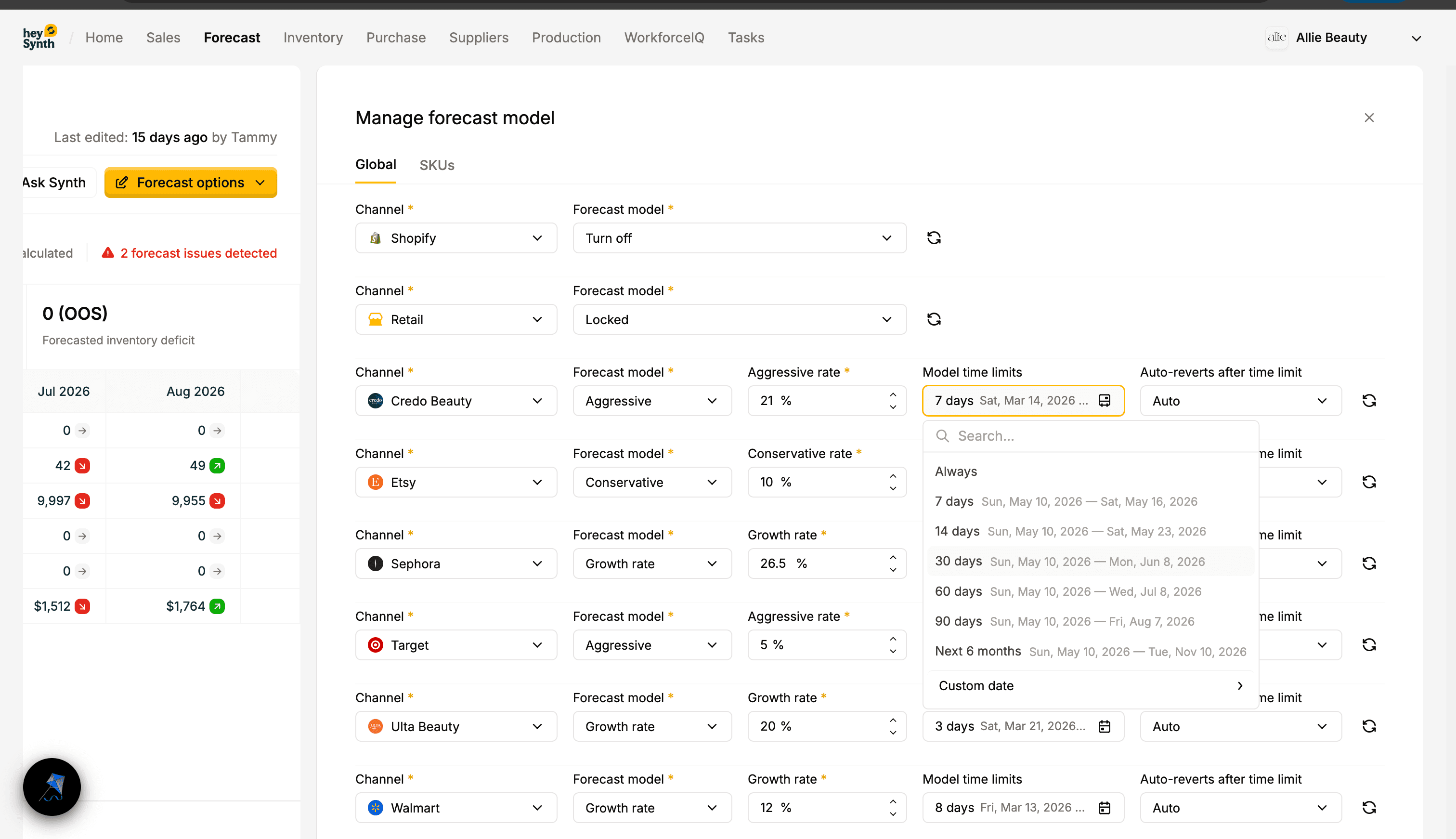 Image proof
Forecast Mode variant: configuration view
Additional proof of channel-level forecasting controls in an alternate configuration state.
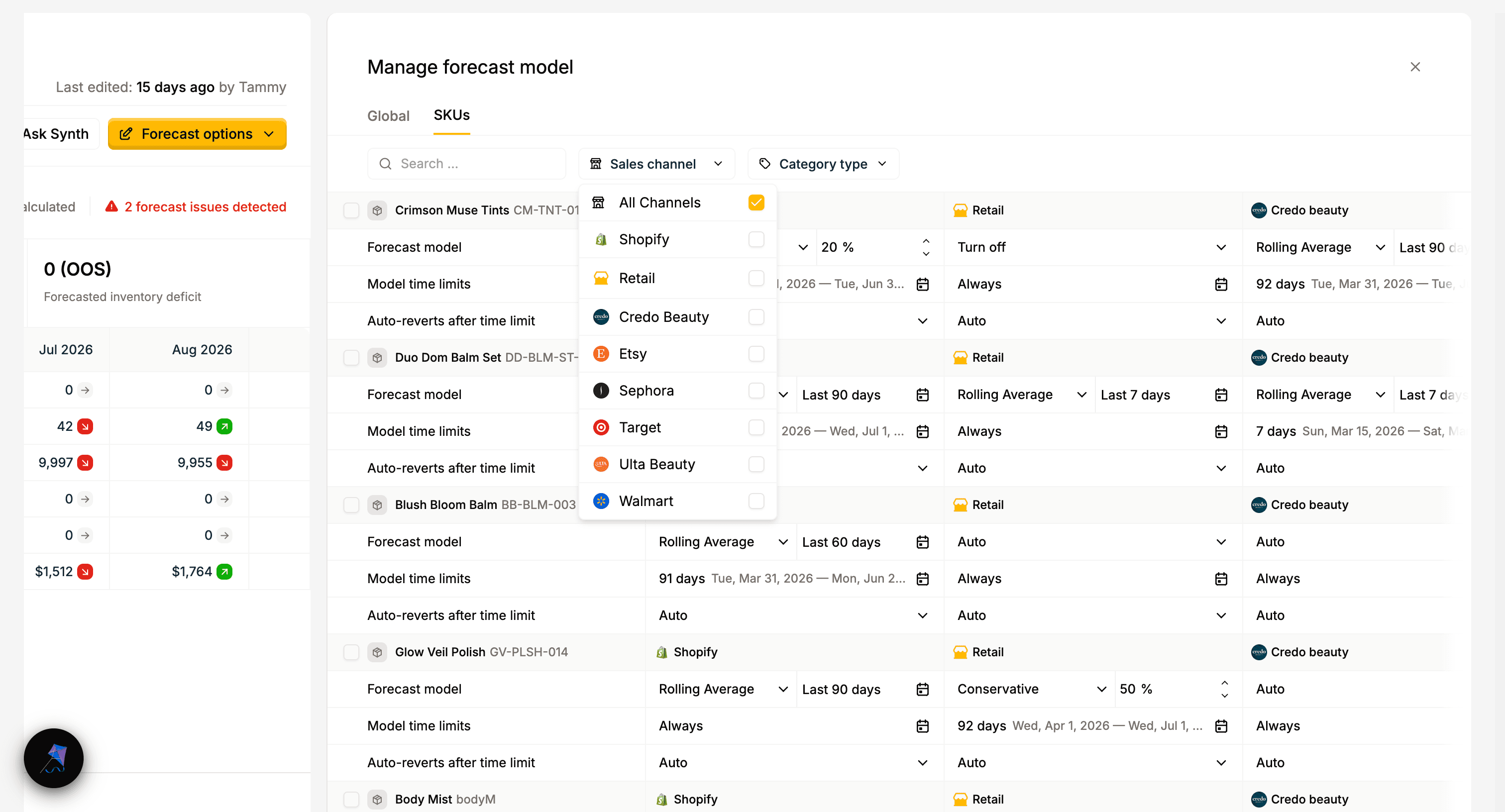 Image proof
Forecast Mode variant: control detail
Supporting screenshot showing control detail and field-level strategy options.
03 / Reliability
Long-running import and forecast jobs were handled as resilient worker workflows.
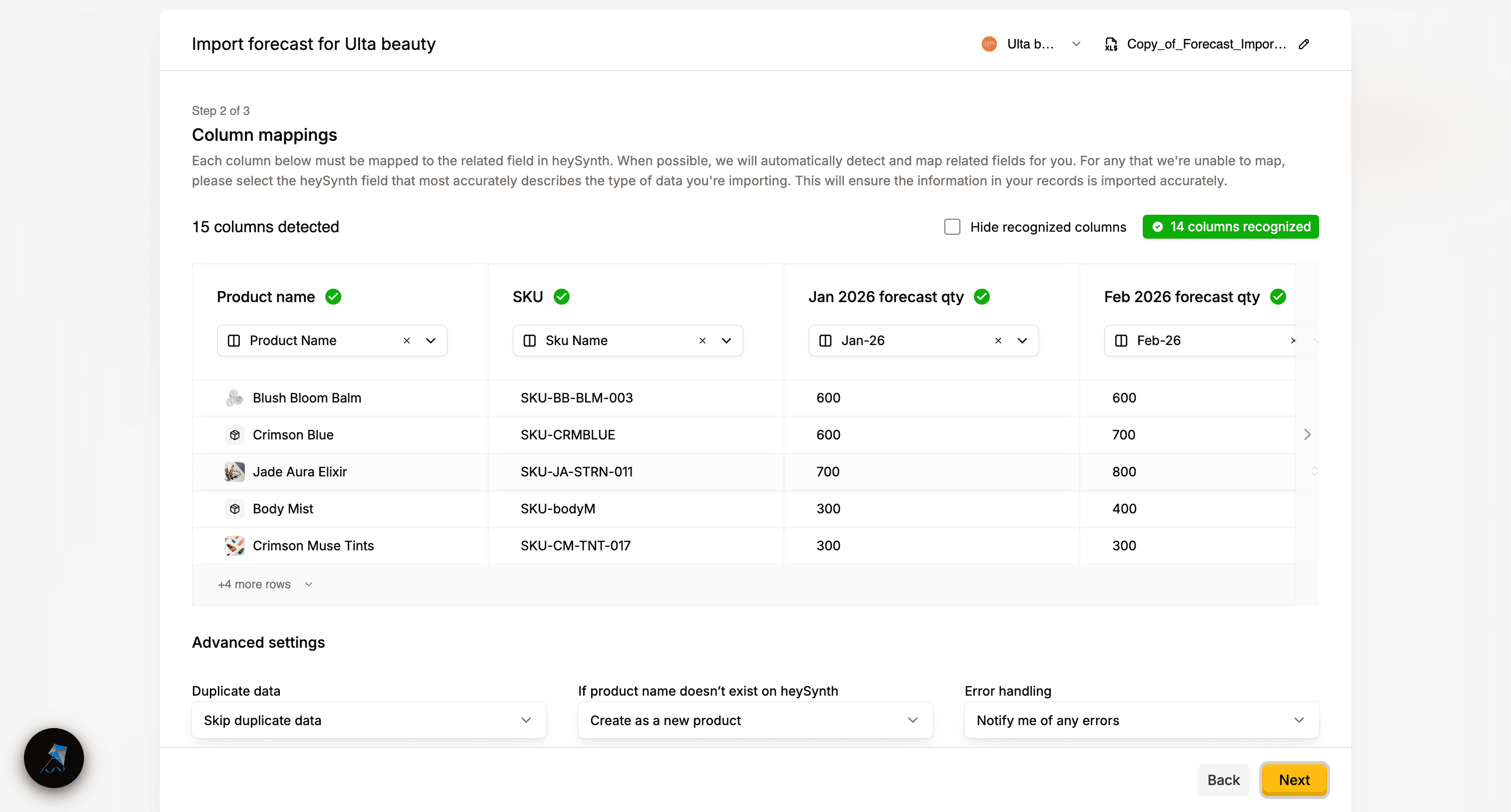
Planning files arrived with inconsistent structure, so ingestion needed validation, mapping, and fallback behavior before forecasts could run safely.
I contributed to worker paths that kept these workflows asynchronous, status-aware, and less fragile under real upload conditions.
This turned forecast ingestion from an opaque background task into a workflow with clearer completion and error signals.
Asynchronous processing improved operational reliability under messy inputs.
Validation and status visibility were critical to planner trust.
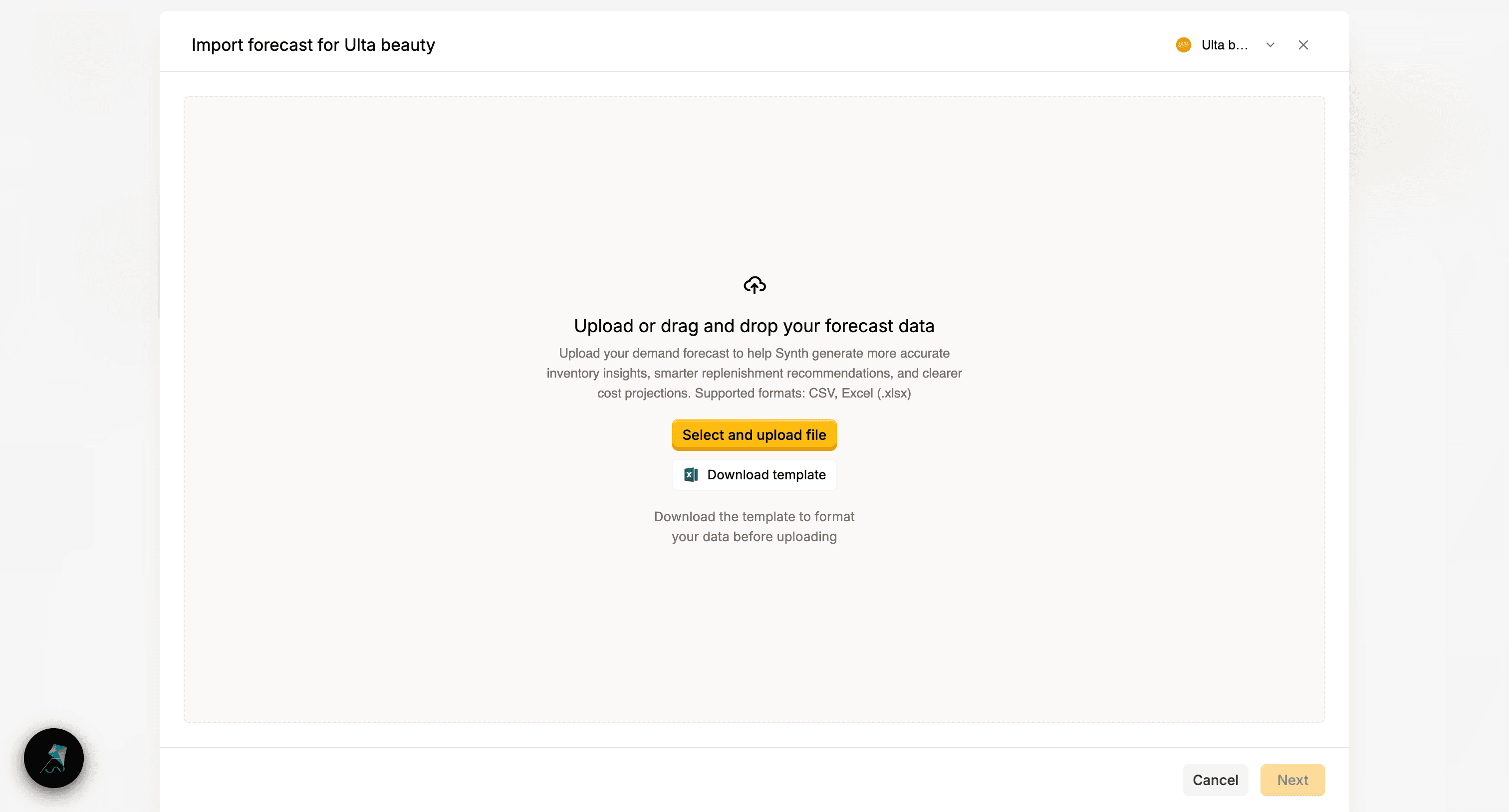 Image proof
Forecast upload and ingestion surface
Evidence of the import pipeline that feeds forecast processing and planning state.
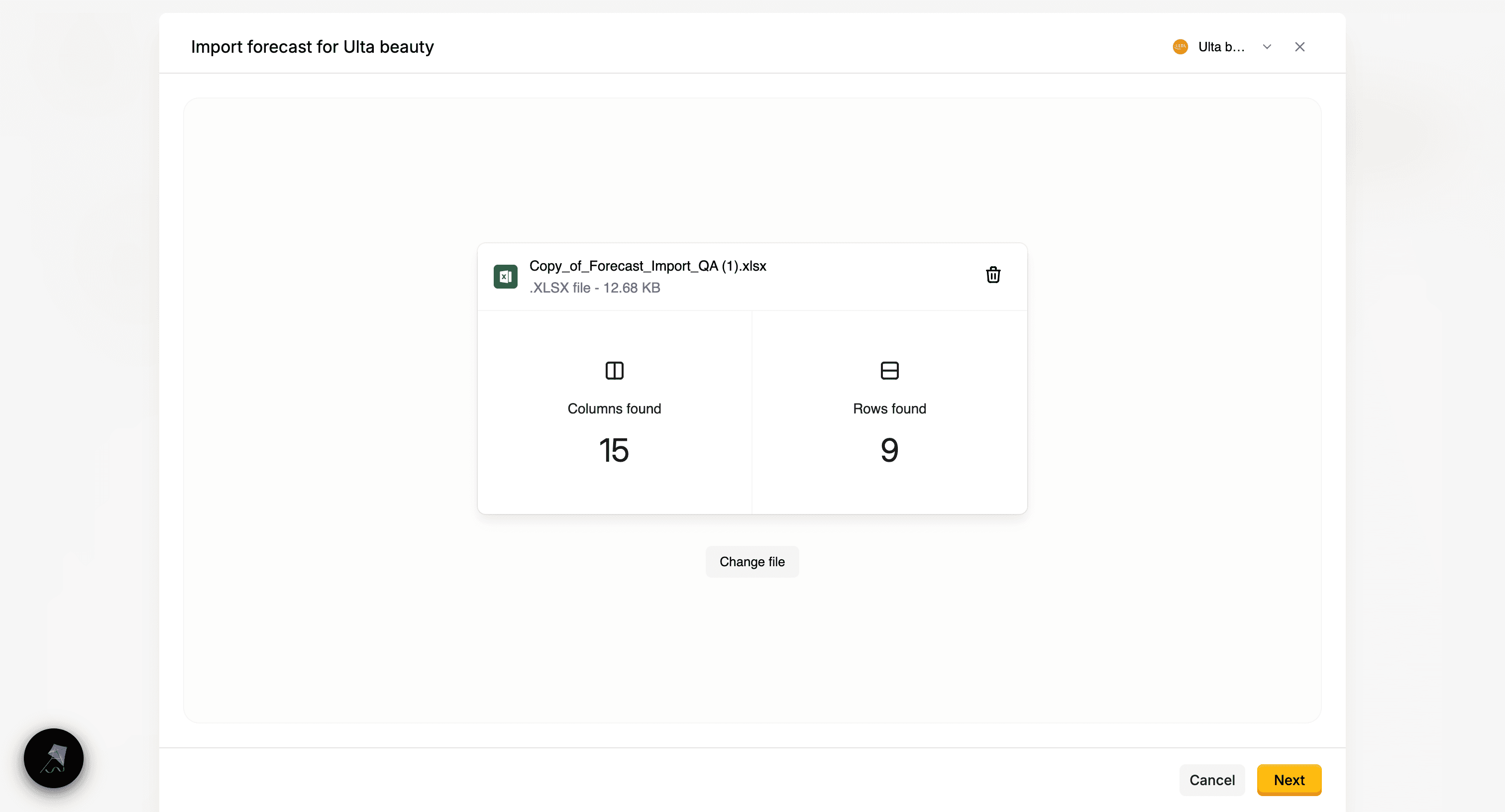 Image proof
Forecast import workflow: additional step
Another stage from the import path, useful for showing validation and handoff progression.
05 / Production Evidence
The screenshot trail reflects a live forecasting workflow.
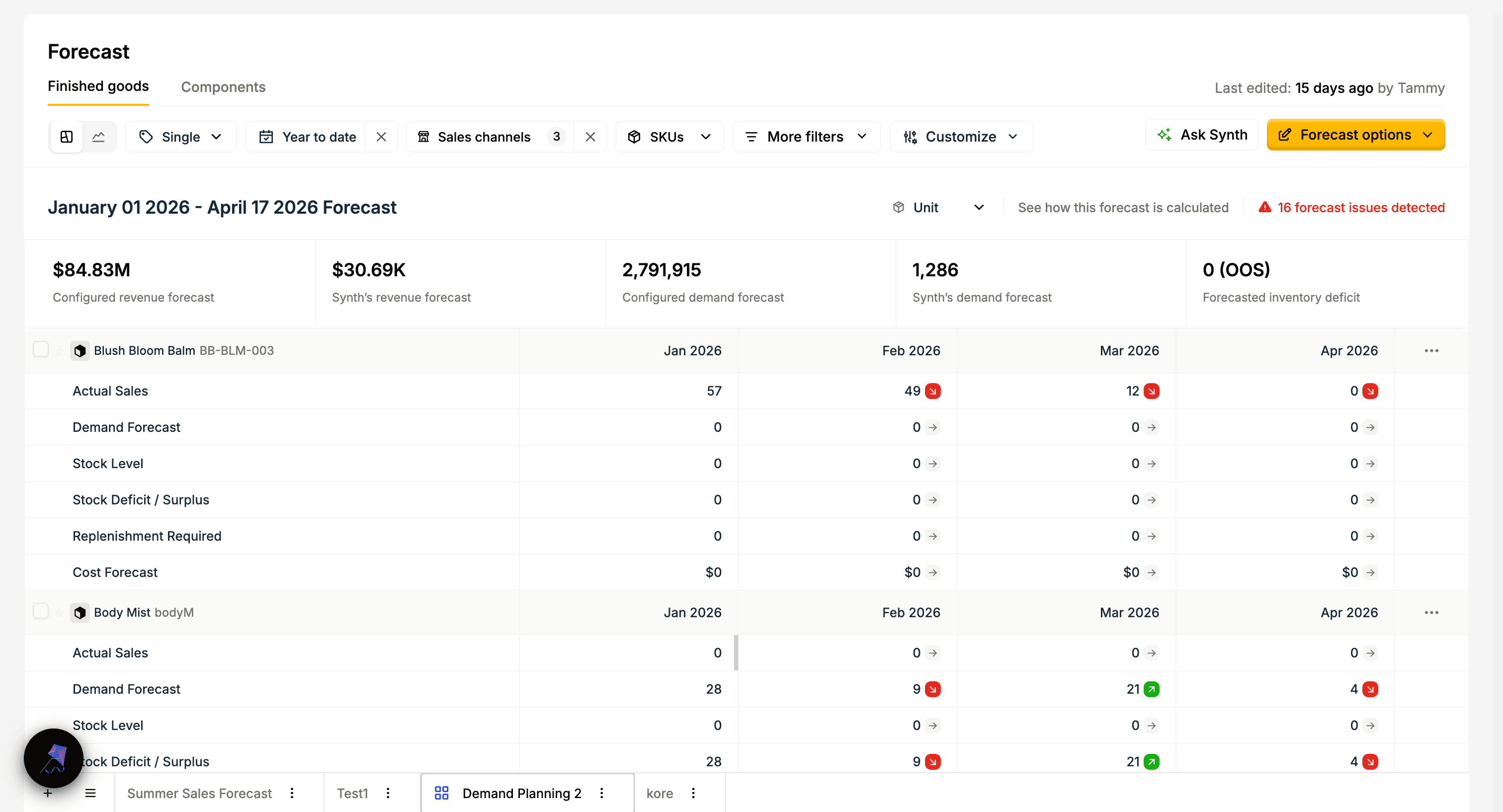
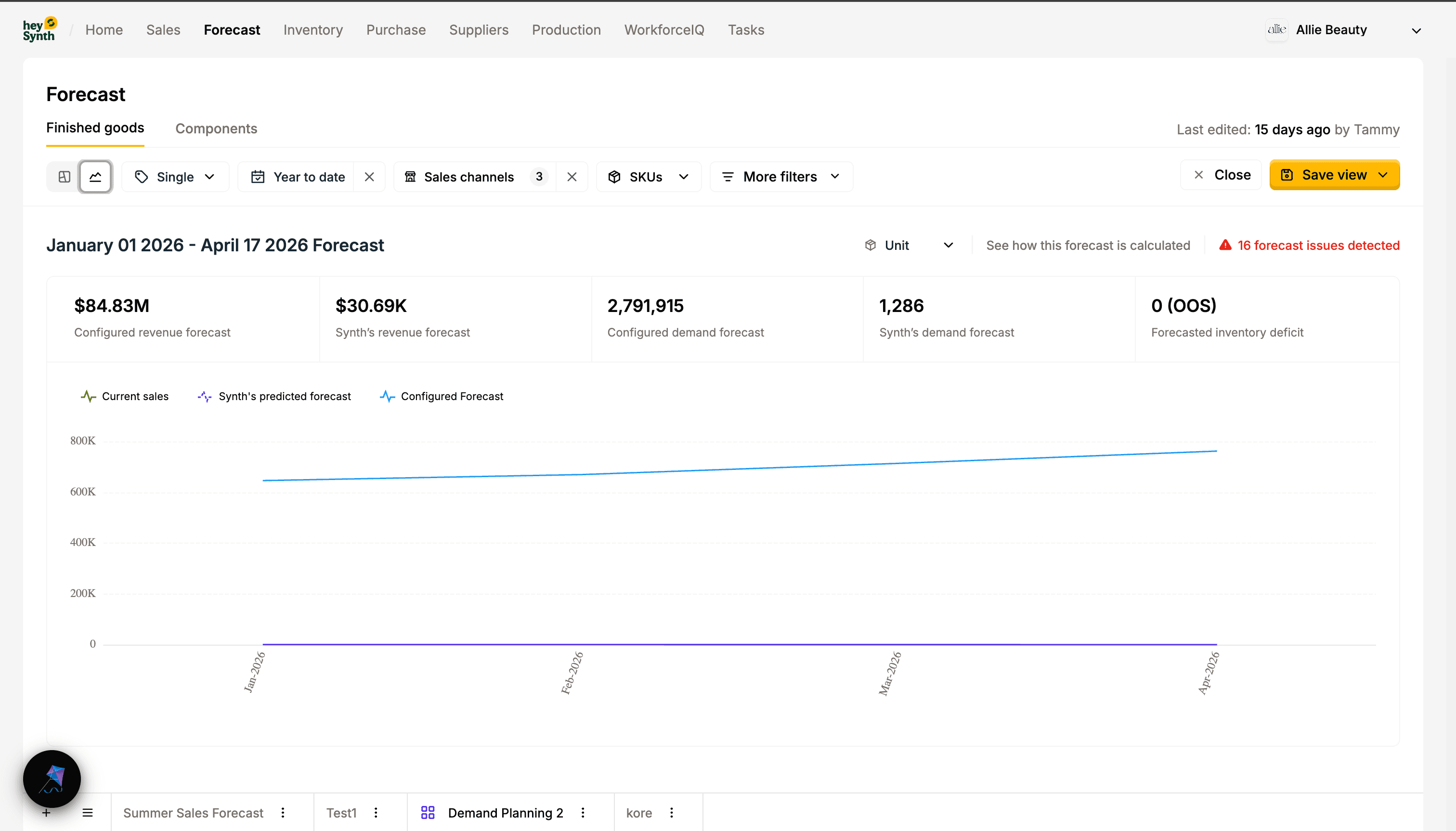
The current proof set now covers control definition, SKU-level overrides, import workflow stages, and forecast dashboard review states.
Together, these surfaces show how model behavior, worker reliability, and operator control are connected inside one production workflow.
The case study now reads as a live implementation narrative rather than a placeholder roadmap.
Forecast strategy is visible and controllable at both channel and SKU layers.
Import and review stages are now evidence-backed with real product screenshots.
Proof Layer
The work spanned multiple connected systems, not one isolated feature.
This is the proof layer: each stream maps to implementation history while keeping private repository and customer details out of the public page.
Adaptive forecasting strategy
ML + model routingProblem
Forecast quality degraded when SKUs with sparse history were treated the same as SKUs with stronger signal.
What I Built
I contributed to forecasting paths that better aligned model behavior with data availability, including safer handling for thin-history contexts and stronger inference paths where data support existed.
Production-facing evidence exists in forecast service contributions and in channel/SKU behaviors represented on the forecast control surfaces.
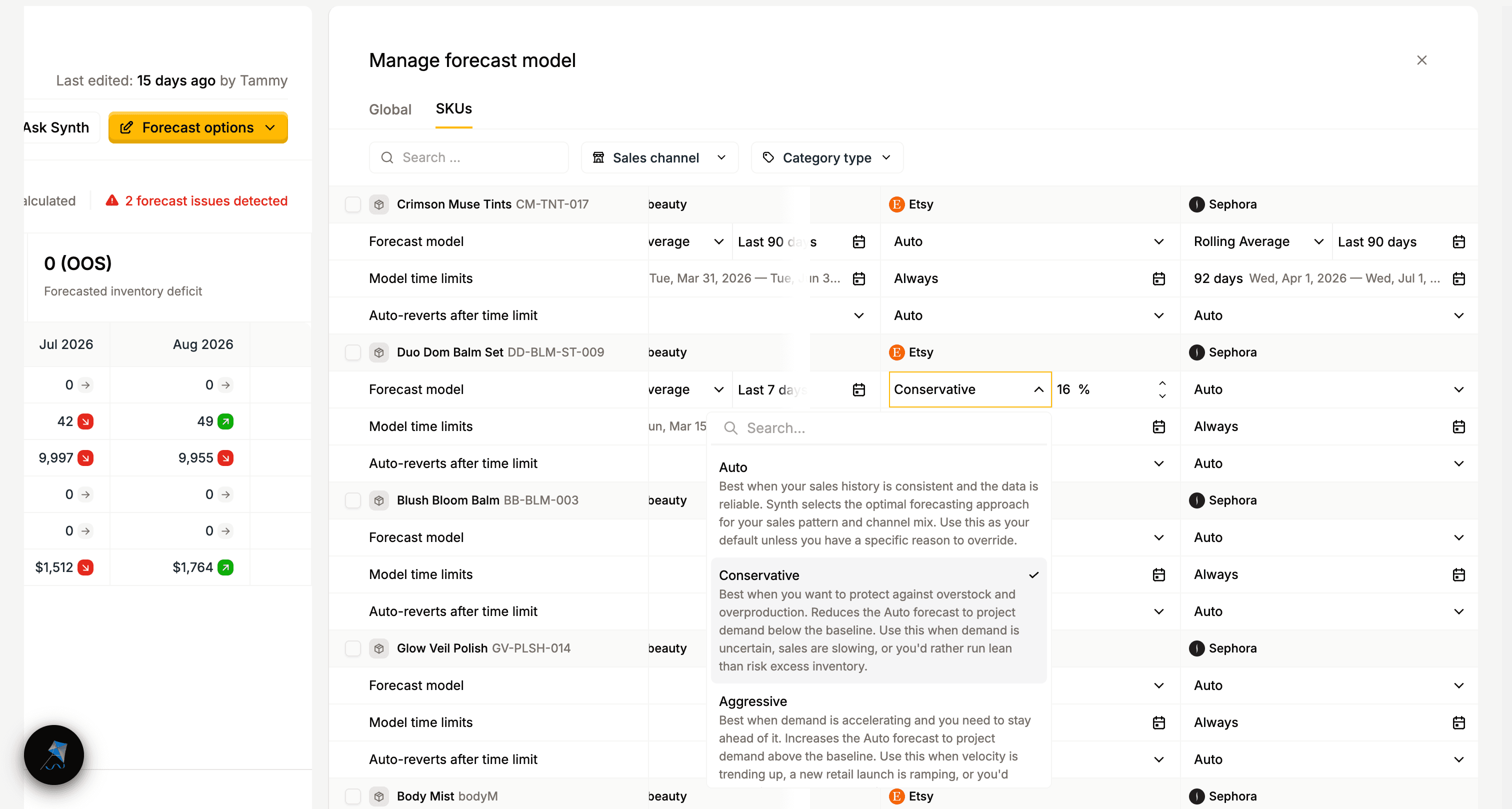 Implementation proof
SKU-level forecast controls
Evidence that forecast behavior can be differentiated at a granular SKU and channel level.
Forecast Mode contracts and controls
Backend API + frontend control surfaceProblem
Operators needed to tune forecast posture without waiting on engineering tickets or relying on hidden backend defaults.
What I Built
I shipped and integrated Forecast Mode behavior across backend contracts and UI states so teams could configure and audit channel-level decisions in-product.
Visible proof on the Forecast Mode screens, including bounded control fields and structured mode settings.
Implementation proofGlobal Forecast Mode management
Channel-wide controls that turn model posture into explicit product behavior.
Import pipelines and worker reliability
Workers + MLOps reliabilityProblem
Forecast uploads needed robust background execution with clear failure/success handling under inconsistent spreadsheet inputs.
What I Built
I worked on asynchronous worker paths and ingestion safeguards to keep forecast workflows reliable and observable without blocking operator experience.
Proof appears in upload/forecast surfaces and implementation history around worker queue behavior, validation, and event updates.
Implementation proofForecast ingestion and upload workflow
The operational path where planning files become forecast-ready pipeline inputs.
Why It Matters
This was not a single feature. It was production AI ownership across the stack.
Evidence
Distinct production ML lens across model behavior, API contracts, worker reliability, and planner-facing controls.
Evidence-backed UI surfaces already show global and SKU-level forecast strategy controls.
Clear MLOps framing: ingestion reliability, asynchronous processing, and status-aware operational workflows.
What this says about me
Shows practical ownership of production forecasting systems beyond notebook-level modeling.
Demonstrates ability to connect model logic with backend contracts and operator UX.
Strong fit for full-stack AI/ML and production ML engineering roles.
Evidence Library
A closer look at the product surfaces.
Curated proof from the workflows behind the story: the operating cockpit, Ask Synth, Playbook, forecasting, and forecast upload surfaces.
Product screenshotForecast Mode global controls
The main operational surface: signals, risk, and suggested actions in one place.
Product screenshotForecast Mode controls variation
Product screenshotForecast Mode control detail
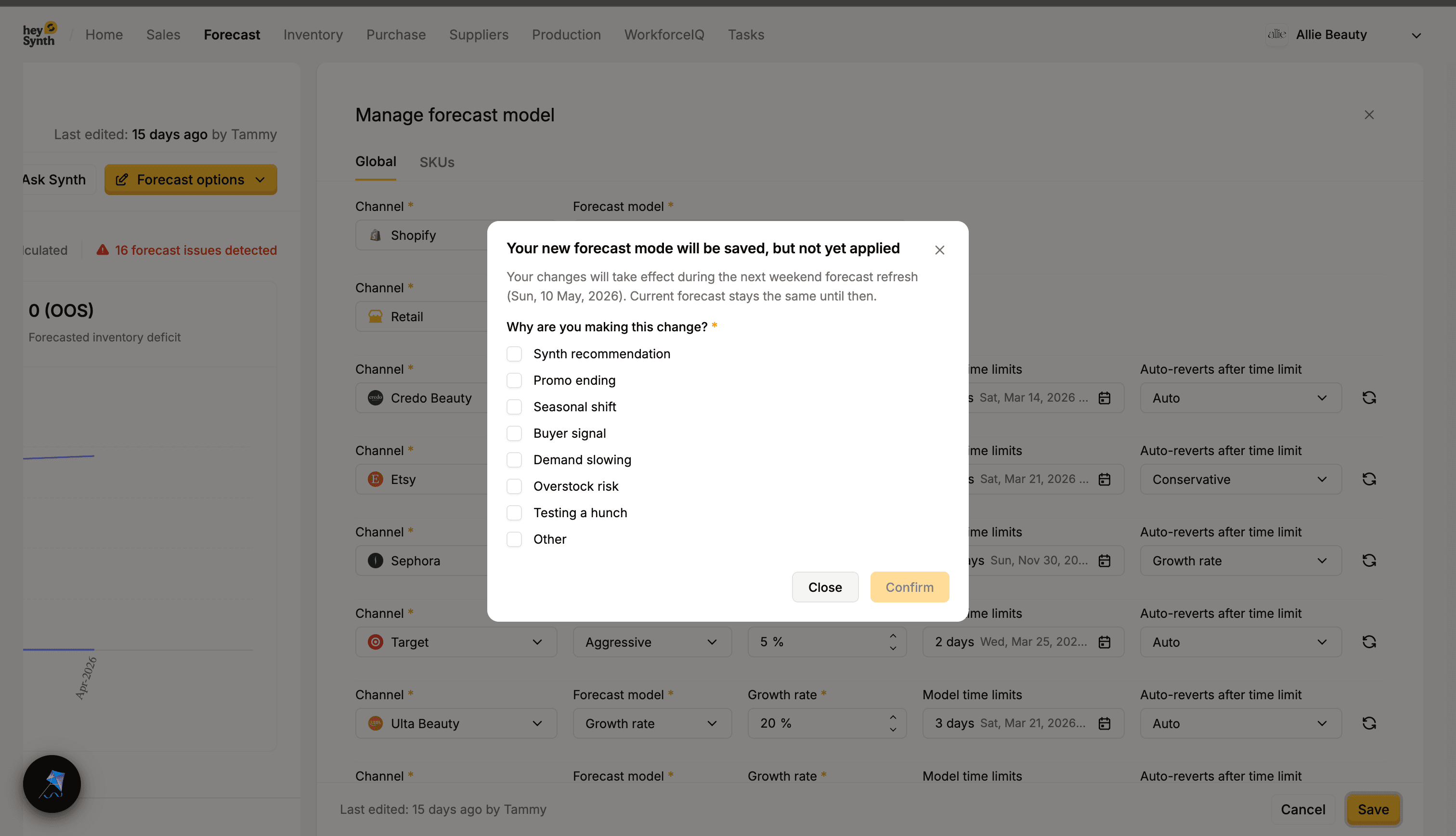 Product screenshot
Forecast Mode control detail variant A
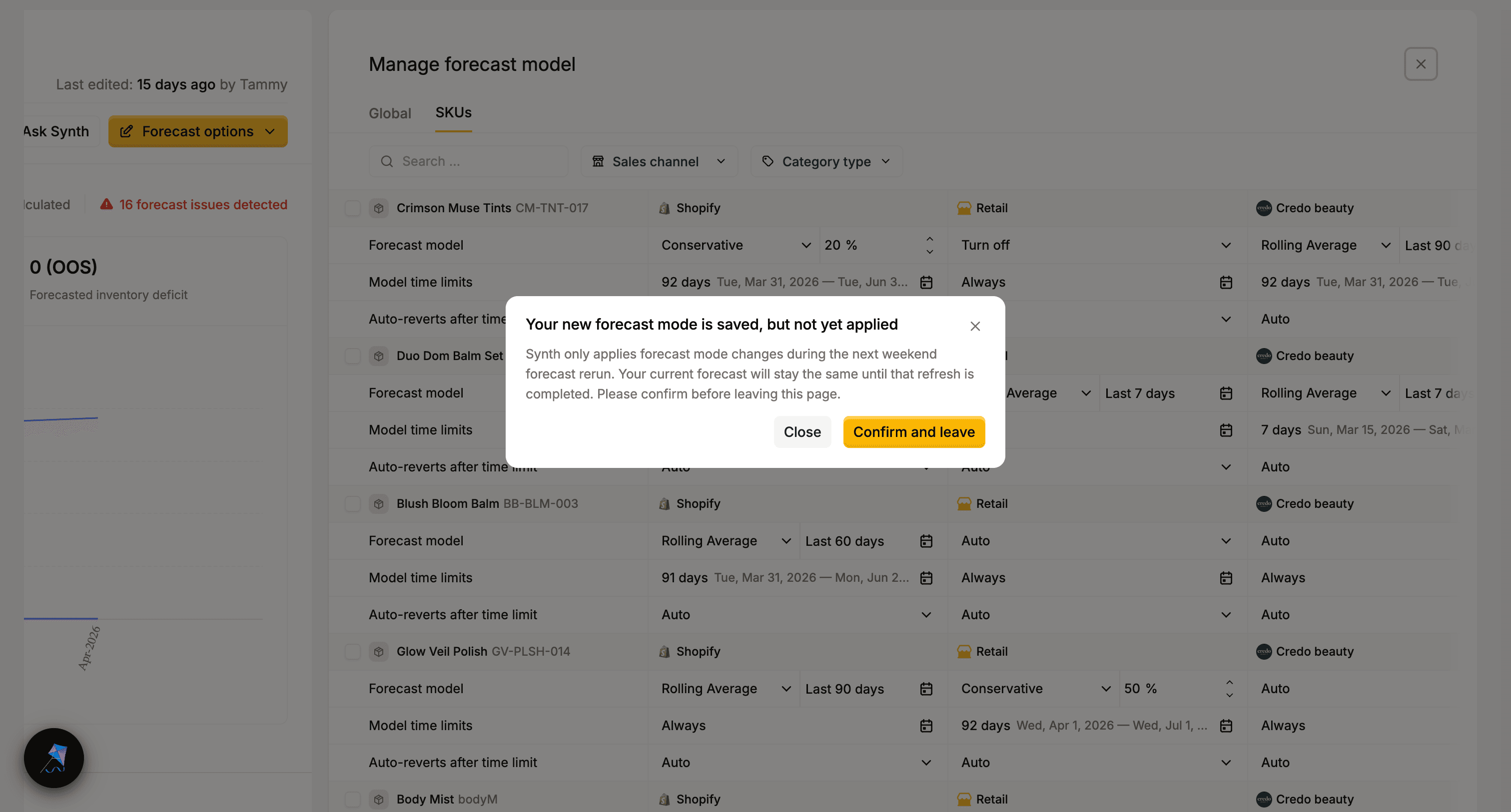 Product screenshot
Forecast Mode control detail variant B
Product screenshotSKU-level forecast controls
 Product screenshot
SKU-level controls variant
 Product screenshot
SKU-level controls and review state
Product screenshotForecast upload workflow
Product screenshotForecast import workflow detail
 Product screenshot
Forecast dashboard state
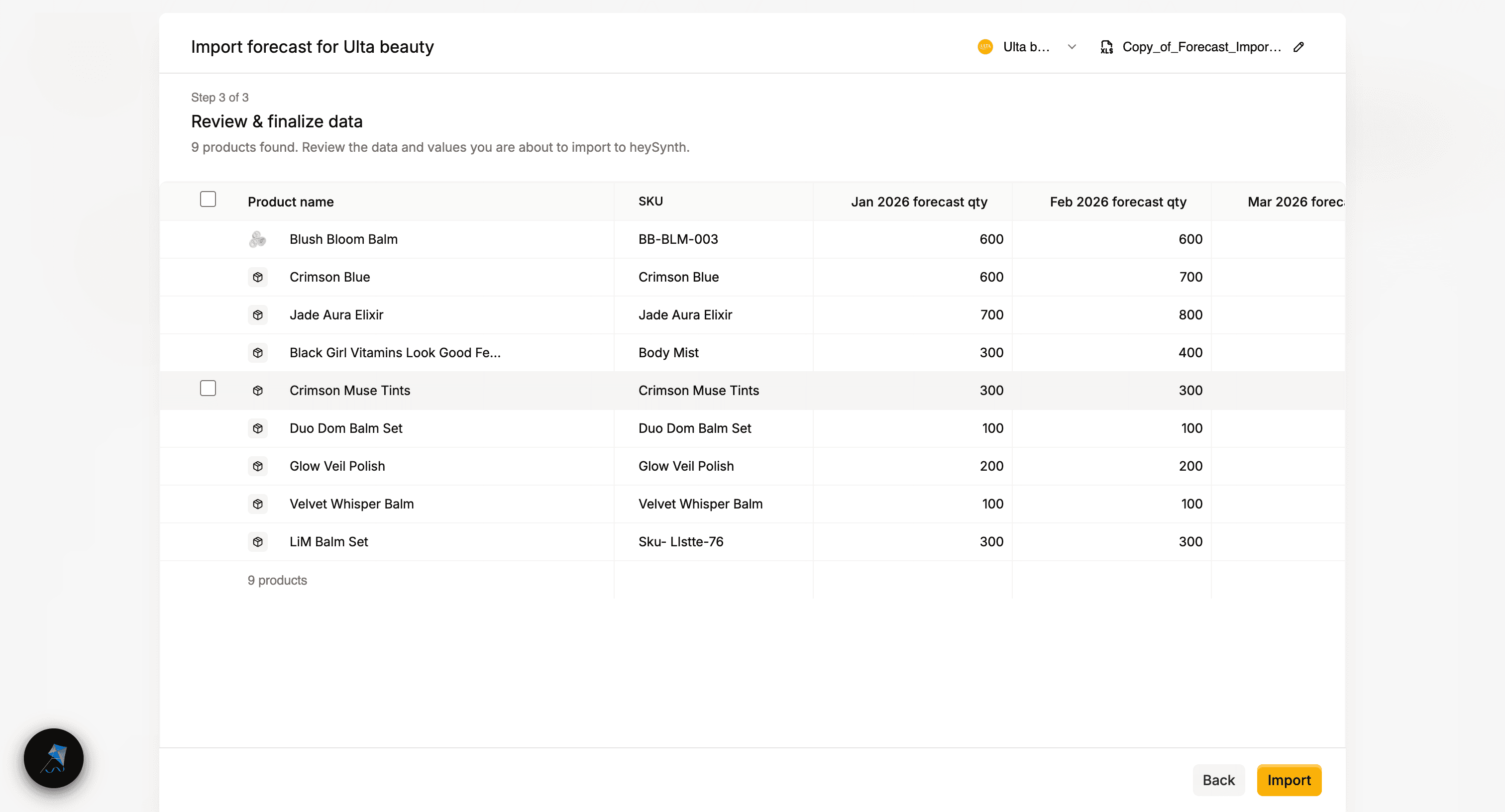 Product screenshot
Forecast dashboard state variant
Decisions
Trade-offs I owned.
Route forecasting behavior based on data depth instead of forcing one brittle model posture.
Expose risk posture and override controls directly in product workflows, not hidden config.
Treat import and processing reliability as first-class MLOps concerns with validation and status visibility.